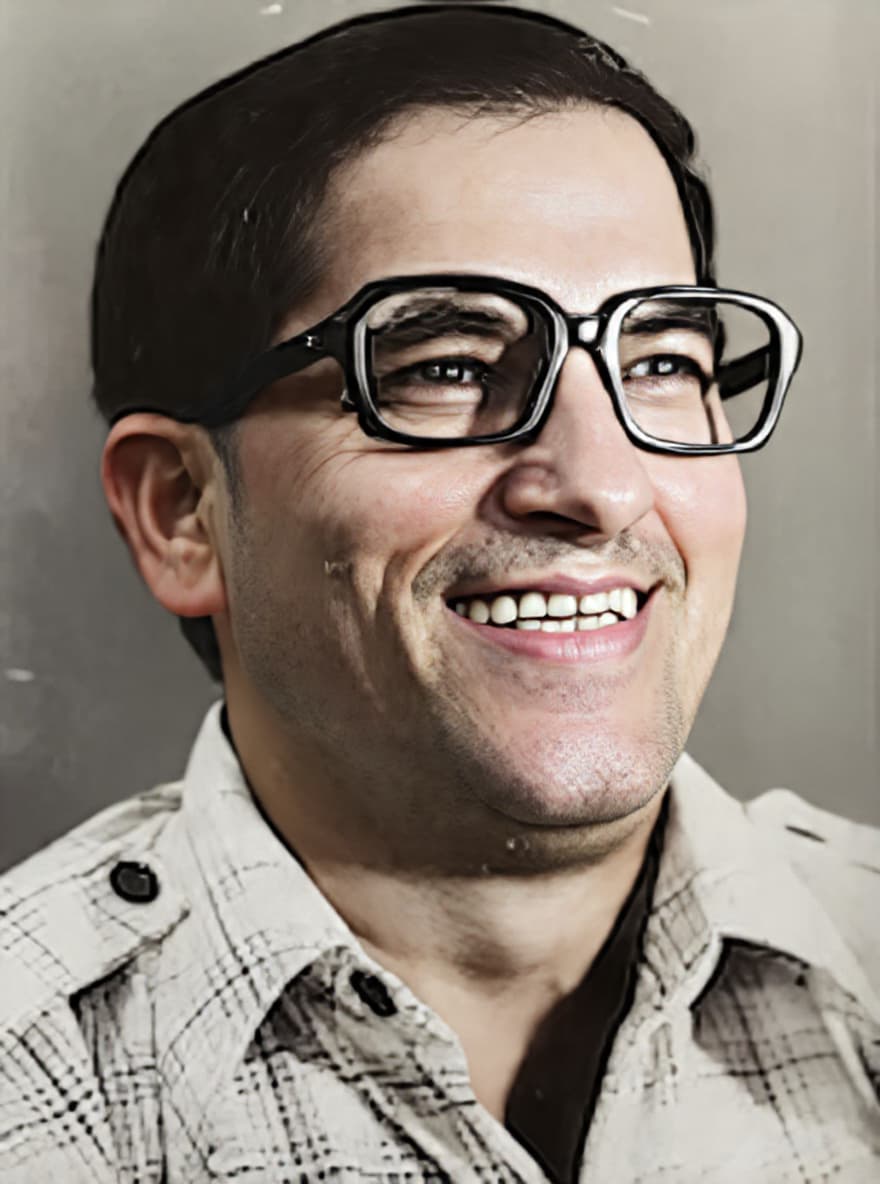
Punjabi writer, mentor and literary patron
Saleem Khan Gimmi
The foundation keeps his literary light alive through relaunched books, cultural documentation, and language advocacy for new generations.
A premium cultural and philanthropic foundation rooted in literary heritage, multilingual respect, and public storytelling.
Gimmi Foundation is shaped as a premium cultural platform: literary philanthropy, Punjabi language preservation, multilingual respect, media storytelling and a practical path for new talent.
Founders
Punjabi writer, mentor and literary patron
The foundation keeps his literary light alive through relaunched books, cultural documentation, and language advocacy for new generations.
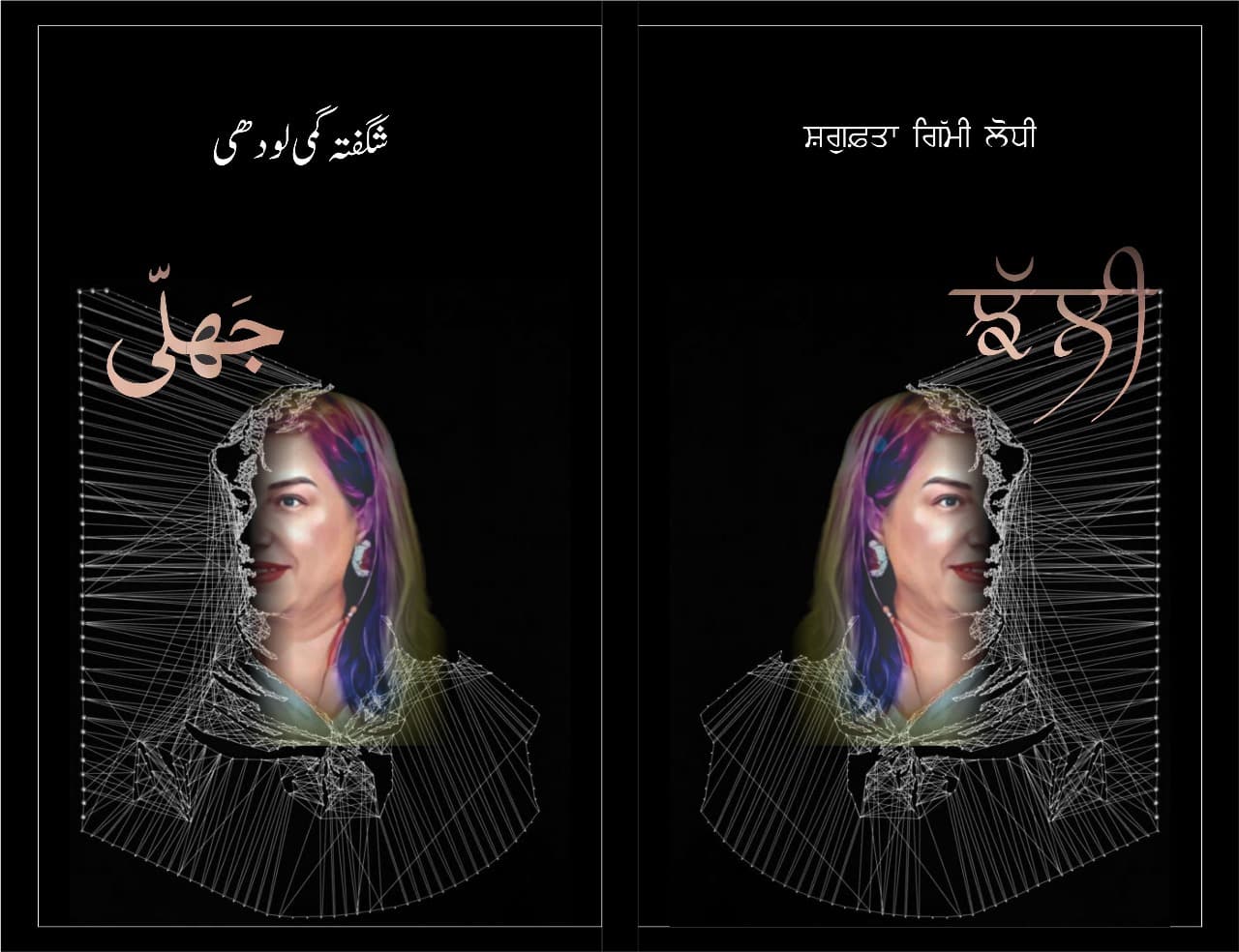
Founder, presenter and public voice of Gimmi TV UK
Lahore-born author in London; writer in Punjabi, Urdu and English with six+ books, Gimmi TV UK, language activism and relaunch of Saleem Khan Gimmi’s literary legacy.
Biography
Saleem Khan Gimmi stands among those vanguards of Punjabi literature who did not merely employ the pen as a medium, but forged it into a living history by intertwining it with the profound truths of his soil, his language, and his people. He requires no formal introduction, for he was not merely a novelist but an epoch-making luminary. As a radio broadcaster, feature writer, playwright, short story writer, biographer, critic, and connoisseur of language, his legacy is etched like an indelible line upon the literary landscape of Punjab.
Saleem Khan Gimmi was born on June 29, 1932, into the household of Karim Dad Khan in the village of Jainpur, Post Office Jhapkara, Police Station Dinanagar, Tehsil and District Gurdaspur, Punjab. As an educated man, Gimmi’s father served as an employee in the postal department during the British Raj. His mother, Khadija Begum, was a homemaker. Saleem Khan Gimmi had two sisters. Being the youngest and the sole son of his parents, he was raised with immense affection and indulgence.
Saleem Khan Gimmi’s ancestors migrated from Afghanistan to the Indian subcontinent during the era of Sultan Mahmud of Ghazni. They belonged to the Lodhi tribe of the Pashtuns. In Punjab, they settled in the village of Noshehra, Post Office Bhikho Chak, Tehsil Shakargarh, District Gurdaspur. Gimmi’s forefather, Jawahar Khan, actively participated in the 1857 War of Independence against General Nicholson.
There was no prevailing tradition of formal education in Gimmi’s village, as the entire community was devoted to agriculture. Saleem Khan Gimmi was the solitary student from his village. He acquired his foundational education, up to the fifth grade, from the Jhapkara Primary School. After completing his primary schooling, he enrolled in the Hindu High School in Dorangla, Gurdaspur. Endowed with an insatiable thirst for knowledge, he would traverse a distance of four ‘kos’ (approximately twelve miles) on foot every day to attend school. At the time of Pakistan’s inception, Saleem Khan Gimmi was in the ninth grade. He matriculated in 1948, passing his examinations from Islamia High School Mengri. Subsequently, he gained admission to Islamia College Lahore.
Literary profile
Dr. Amjad Ali Bhatti
Shagufta Gimmi Lodhi belongs among those writers whose identity cannot be confined to a single category. She is poet, scholar, critic, translator, fiction writer, and an active voice in the social and literary debates of her age. The most striking aspect of her personality is that she does not treat literature merely as a medium of expression but binds it to cultural consciousness, scholarly service, and social awareness. Her literary journey testifies that when a sensitive mind aligns with tradition, study, experience, and social feeling, it does not merely write books but draws a new line upon the intellectual map of its environment.
Born in Lahore and now resident in London, Shagufta Gimmi Lodhi carries within her both the gentleness of Eastern civilization that remains attached to its past and the intellectual openness that does not turn away from the questions of a new age. This is why her writings offer, on one side, the fragrance of the soil, and on the other, a clear awareness of present-day complexities. She is not only a member of a literary household that bequeathed her the pen and thought, but has herself advanced that inheritance through her own labour, taste, and scholarly seriousness.
Her father, Saleem Khan Gimmi, was an important literary name of his time. As scholar, critic, translator, and fiction writer, his standing was firm. To be the daughter of such a father is in itself a relation, yet to shape that relation within one’s creative temperament and move forward is a separate achievement. Shagufta Gimmi Lodhi did not view her father’s literary personality merely as family pride but felt it as a responsibility. This very feeling brought her to a place where she became an independent literary identity. The scholarly seriousness, critical balance, and heartfelt attachment to language visible in her certainly owe something to family upbringing, yet all of this is not merely inheritance but the fruit of personal struggle and sustained discipline.
In discussing Shagufta Gimmi Lodhi’s creative identity, mention of her Punjabi novel Jhalli is indispensable. This novel brought her out of the circle of poet or translator and presented her as a fiction writer who knows how to express artistically the fractures of the human inner life, social pressure, a woman’s inner anguish, and the complex questions tied to lived experience. Success in fiction is not merely telling a story but seeing how deeply the writer has entered the human being. The importance of Jhalli lies in the absence of superficial emotional writing and the presence of experiential truth. Novels of this kind make one feel that woman is presented not merely as subject but as a living, conscious existence.
Testimonials
Zahid Hassan
Shagufta Gimmi has lived abroad for a long time, yet reading her Punjabi writings one feels as though she still lives in Punjab — or that Punjab lives within her. Her works are woven and vibrant in that way — and why should they not be? She is the gifted and renowned daughter of the committed Punjabi writer, linguist, thinker and storyteller Saleem Khan Gimmi, who devoted his entire life to the advancement of Punjab, Punjabi and Punjabi identity.
Shagufta Gimmi is herself a research scholar, translator and novelist; besides this, a book of hers entitled Cancer and Its Types has also been published. My own view is that for the enrichment of the Punjabi language there is great need to write on such diverse, excellent and new subjects so that good books in Punjabi may increase — and in this spirit she has also written another fine book on Punjabi folk songs and customs, which would be beautiful and valuable work to acquaint people across the world with the songs, customs and rites from birth to death in Punjab and with Punjabi culture and civilization. She has also translated into Urdu her father’s important book Punjab and Punjabi, and has written on research in universities.
Nowadays she is working on two other important fronts: one is a research-filled book on Guru Nanak’s Muslim companion and rabab-player Bhai Mardana, and alongside this she is doing excellent work entitled The Evolution of Punjabi Cinema.
Hafeez Tahir
Jhalli is the story of an entire era that our generation has lived through. All its characters are alive and still relevant.
The girl, her parents, progressives and non-progressives, the honest and the hypocritical, lovers and deceivers — all these people are still around us. But that tree is no longer there before which Jhalli used to pour out her grief.
Shagufta Gimmi has written this novel from the heart, and it feels as though Jhalli is herself telling us her story. This novel will remain relevant for many generations to come.
Amritjit Chandan
At literary gatherings here in the UK I continue to meet Shagufta Gimmi Lodhi. I have had the opportunity to know her views on literature and other subjects. She is a true servant of her mother tongue Punjabi.
Shagufta respects elders greatly. I have read her writings, poetry as well as the novel. Her novel Jhalli is among the finest examples of progressive literature.
The part of this novel that shows the socialist current in West Punjab pleased me greatly. The character Aslam in the novel presents a true picture of the comrades of that time.
Khalid Farhad Dhariwal
Shagufta Gimmi Lodhi is an important writer of our times. In a very short span she has made a strong mark in the field of literature.
I have read her novel Jhalli. This novel presents a true and painful portrait of a woman’s real life in Punjabi society.
The main character of the novel, Firdous, is a woman who, despite being educated and capable, faces disrespect.
A platform for joy, love, dignity, freedom and authentic expression.
Punjabi is celebrated alongside equal respect for all languages and cultures.
Known and unknown artists are documented, interviewed and introduced to wider audiences.
Legacy
Saleem Khan Gimmi’s literary work becomes the cultural spine of the foundation.
Scholarships, sponsored publishing and book relaunches become structured social impact.
Media
Gimmi TV UK expands the mission into interviews, songs, poetry, vlogs and awareness shows.